






Proficiency and Professional Certification Programmes
Proficiency and Professional Certification Programmes are structured learning pathways designed to equip professionals with industry-validated competencies, practical expertise, and globally relevant certifications that enhance performance, credibility, and career mobility across evolving sectors.

Executive Consulting Programme
The Senior Executive Programme in Strategic Impact Leadership and Consulting Intelligence Development is an advanced leadership and transformation programme designed for senior executives, business leaders, consultants, policymakers, and organizational strategists seeking to operate at the highest levels of strategic influence, innovation, and institutional impact.


Diploma
The Executive Diploma in Business Administration and Management equips professionals with practical leadership capabilities, strategic thinking frameworks, and operational management expertise required to drive organizational growth in dynamic business environments.

Advanced Diploma
In a world of standardised solutions, true leadership demands a customised path. The Advanced Executive Diploma in Business Administration and Management is not just a program; it is a catalyst for your strategic evolution. Designed for the seasoned professional, this diploma empowers you to architect your own learning journey—selecting specialisations that directly address your organisation's most pressing challenges.
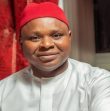
) is the CEO of PM Furniture Ltd, Kosher Property Ltd, Founder and Director General Ihe Abia Organization. What I gained from LLBS: LLBS is a One Stop Institution, Transformational, Re-Branding, Overhauling, Re-engineering, Re-organizing and lots more to Humankind. Coming in contact with LLBS; for me, it was a TOTAL RESET, only a trial will convince you thanks. He is a Serial Entrepreneur, Politician, Motivational Speaker and a Multi-Talented Personality. Vice President FGBMF, Sunshine Chapter, Secretory Sub-Committee on Transportation FGBMF National Convention 2014 and Member ECCIMA Sub-Committee on SME He is the traditional ruler of Umuamam-Ehi Umuogele Amuda Isochi Umunnochi LGA Abia State
Ichie Emeka Okpara (Onwa)
CEO of PM Furniture Ltd, Kosher Property Ltd, Founder and Director General Ihe Abia Organization.

has over 27 years’ experience in development program with an emphasis on plan and policy development, program design, procurement, monitoring and evaluation, as well as extensive computer research and data collection and analytical skills. My programme at LLBS serves as a re-tooling mechanism for me to launch into a new dimension of my life, career and professional journey.
Nnanyelugo Dan Onyishi
The Executive Secretary, Enugu State Economic Planning Commission

I learnt the practical and effective ways of cash-flow management and Skills in development of sound business plan. A Senior Priest in the Anglican Communion currently in charge of the New Haven Archdeaconry of Enugu Diocese. A graduate of Agricultural Economics of the Federal University of Technology Owerri (FUTO) and also of Religion from the University of Nigeria Nsukka. Completed course work for Master of Science in Agricultural Finance. A preacher of the Gospel of Christ. Aggressive soul winner, An Entrepreneur, and a Management Consultant on Small Scale Farm Holding Enterprise
Ven. Kenneth Anezichukwuolu Ugwuagu
Senior Priest in the Anglican Communion

I learnt so much, but particularly I was excited about the topics on Cash flow and Strategic Managemen
Olisa Mokelu
Student from Nigeria

LESSONS LEARNED AT LLBS 1. Prior to joining the school, the real essence of life was not defined to me. Coming here has enabled me to re-focus my dreams and aspirations to a more concise and clear-cut terms. 2. The art of managing and developing a business has becoming a sidearm to since joining this school. The classwork discussions and analysis based on real life practical situations, suits me like a glove.
Chidiebere Echezonachukwu Mbachu
General Manager- Operations ANBEEZ Services limited

What I have learnt from Learn To Live Business School. Learn to Live Business School is indeed a blessing to me in so many ways. I will say it is the best thing that happened to me in recent time. LLBS has taught me how to prepare a correct cash flow. I have also learnt how to identify specific pricing strategies and as a Salesperson it is a very important tool for me and my organization. I now have a very good understanding of strategic leadership and development thanks to Learn to live Business School. LLBS has shown and made me to understand why some brands fail and as a Sales Manager of a leading cement company the knowledge is very key for me. I have also learnt current strategies of brand leaders and how I can turn my brand into a brand leader. Honestly, I have learnt so much from LLBS and I am indeed grateful that my path crossed with this citadel of learning and development. Lastly, Learn to Live Business have expanded my mind and given me a paradigm shift.
Pst. Okenwa Chigozie Chibunna
Regional Sales Representative BUA Cement

My Experience and Knowledge from LLBS The knowledge from the teachings and experiences shared during our classes on Human Resource Management and Business Administration has helped me a lot in developing the right strategy to apply when managing people in a company or organization. Such strategy has also added greatly to the growth of our business by helping us gain a competitive advantage over others.
Mrs. Marcus Ogechukwu Linda
Greenzeal Development Ltd, Enugu

WHAT I HAVE LEARNT AND GAINED IN LEARN TO LIVE BUSINESS SCHOOL.
I have learnt to think like an investor and to consider the target market first in any new and existing business. In addition, I have understood the importance of corporate governance and how to manage family businesses averting family issues that has affected family businesses and how to strategically bring in the children and siblings properly into any business that is nurtured by family members. I also gained how to create a simple cash flow projection and how to interpret one.
Dr. Anaesiuba Uzodimma Ndubuisi
Medical graduate from the College of Medicine University of Lagos. Fellow of the Health Insurance and Managed care Institute of Nigeria

What I have learnt from the school:
Within the duration of my studies, I have gained more understanding about practical management principles and techniques as applied to Personal business development. In fact, the programme has made me know the importance of a simple Business plan and Cash flow projections for a successful business performance.
Mr. Odey Joseph Anthony
GB Operation LEADWAY Assurance Nigeria

A Medical Doctor practicing for over 15years.Specialised on OBS & Gynecology. Zonal Coordinator Wise Health Services Limited southeast zone. CEO Chineva Pharmaceutical Limited.
At Learn To Live Business school I have learnt a lot in business. The school has opened my brain to understand more on what it takes to be a successful businessman and an entrepreneur.
Dr. Okpala, Valentine C.
(MBBS) UNIZIK. M.Sc. Public Health (London)

Within the duration of study, I learned the importance of developing entrepreneurial skills before venturing into developing a new business model. I also gained knowledge on strategic management and the steps to strategic management process, which has to do with Environmental Scanning, Strategy formulation, Strategy implementation and Strategy evaluation, and their impact in determining the result of a firm’s performance. Furthermore, I have learnt practical principles and techniques in management that can be applied to personal business development. Most importantly I now understand what it means to develop cash flow projections with ease. Thank you LLBS for this opportunity to learn, re-learn and unlearn.
Arinze Udechukwu, ACIPM
LEADWAY Pension Zonal Coordinator Supervising Business Activities in most of the Eastern States in Nigeria

Learn To live business school is the right place when it comes to practical business skills. I really appreciate its sequential training approach beginning from developing an entrepreneurial mind set, feasibility study and business plan, business formation, growth and competitive strategies as well as setting up a good corporate governance structure. Your course is all round comprehensive covering both professional and academic aspects of business with specialize subjects in finance, accounting, economics, marketing, management, human resources. My learning outcome with you could be summarized as experience and exposure in business dealing. I really appreciate.
Uduak Jackson Ekanem (ACA)
Ag Bursar, Ritman University and Principal consultant- Silverpenny Consulting. A Chartered Accountant and a Forensic Accountant. I have gained great knowledge and practical steps

I have gained great knowledge and practical steps on how to strategically harness every opportunities in every area of my life.
Paschal Chibuzor Okenchi
ESTATE SURVEYOR, REAL ESTATE CONSULTANT, ACADEMIC RESEARCHER